Building a complete brand identity for a kids' lunch delivery start-up, from strategy and naming to logo, typography, colour, illustration, and brand applications.
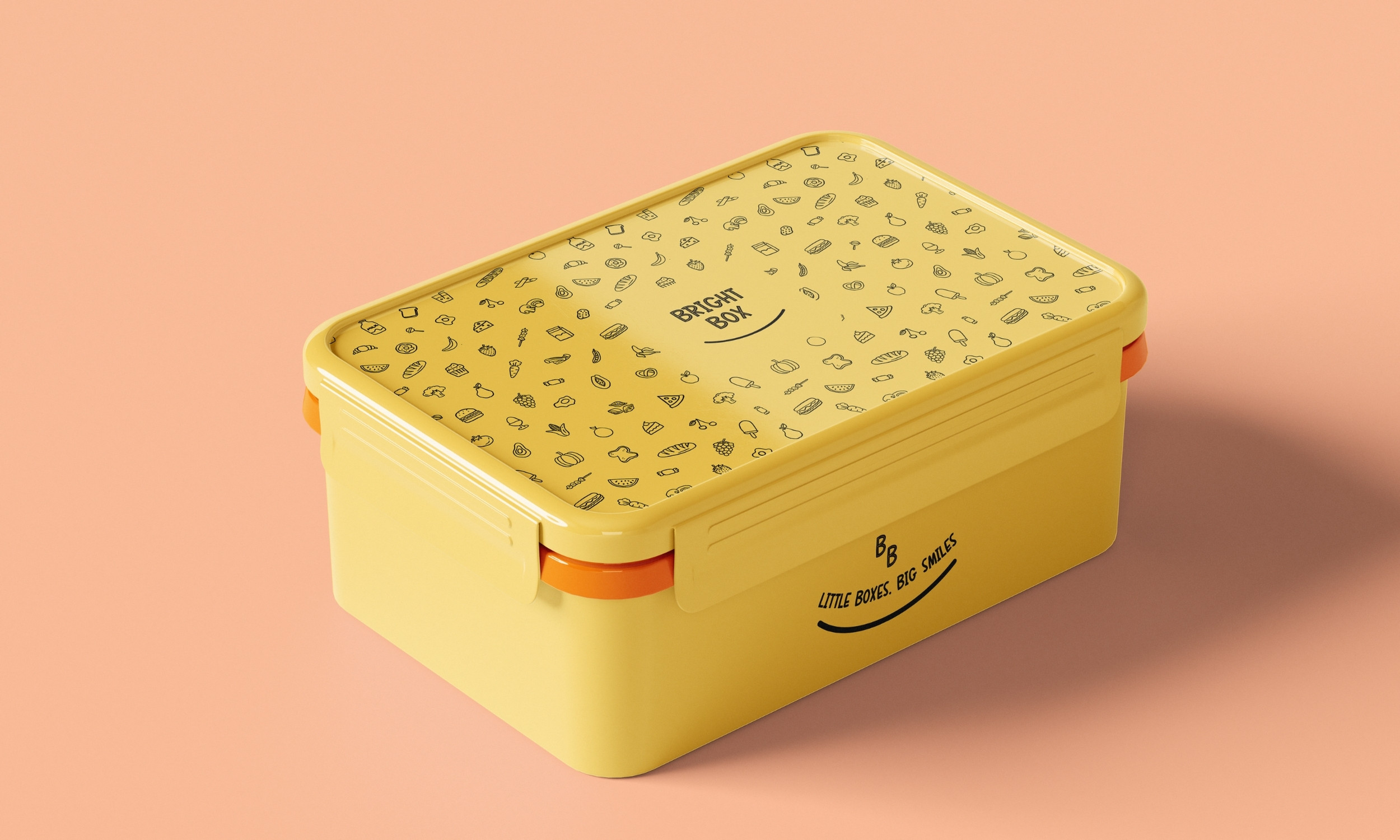
Branding & Visual Identity Design
Brand strategist, Graphic designer
Food & family lifestyle
Figma, Procreate
2025
BrightBox is a fictitious kids' lunch delivery start-up with a genuinely tricky design challenge baked into its brief: the brand had to speak to two completely different audiences at the same time. Parents — the ones paying for the subscription — needed to feel reassured about quality, nutrition, and reliability. Kids — the ones actually opening the lunchbox — needed to feel excited about what was inside.
Most brands in this space pick one audience and quietly hope the other follows. The goal here was to create a visual identity that worked for both simultaneously, without compromising either.
The result is a complete brand system covering logo, typography, colour palette, custom hand-drawn illustrations, brand voice, and physical applications — scalable across packaging, digital platforms, and marketing from day one.
The work started with audience analysis, because designing for "parents and kids" without specifics is a recipe for beige.
The primary audience — parents, predominantly mothers aged 25–45 in dual-income households — had a clear and consistent set of needs: convenience above everything, reassurance about nutrition and food safety, and sustainability credentials they could feel good about. They were time-poor and decision-fatigued. The brand needed to remove friction, not add to it.
The secondary audience — school-aged children between 5 and 12 — operated on entirely different logic. They responded to colour, character, novelty, and peer influence. A lunchbox that looked exciting at the table mattered. Bland packaging on a great meal still loses.
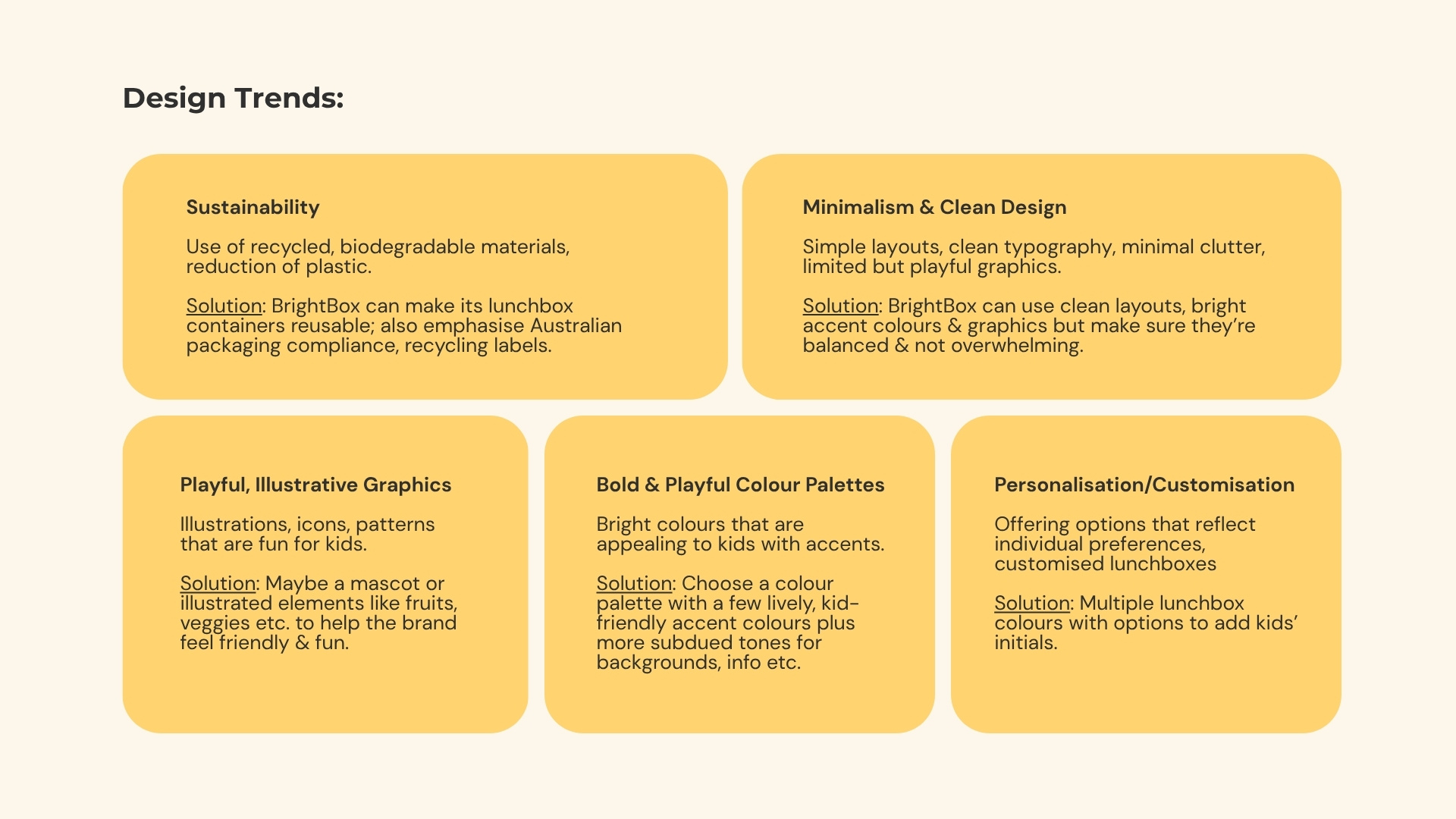
A study of design trends in the food and family lifestyle space surfaced five directions worth responding to: sustainability and eco-friendly packaging, minimalism and clean layout, playful illustrative graphics, bold and kid-friendly colour palettes, and personalisation options. Each trend was mapped directly to a BrightBox design decision rather than treated as passive inspiration — sustainability informed the delivery bag choice, illustration style informed the pattern system, personalisation informed the lunchbox customisation proposition.
Research on both target audiences was then formulated into a clear problem statement that would guide the ideation phase:
Parents today are busier than ever — juggling work, school runs, and the daily pressure of making sure their kids are eating well. Packing a healthy, balanced school lunch every single day is one of those tasks that sounds simple but adds up quickly. For many families, it's a source of genuine stress. At the same time, getting kids to actually eat healthy food is a battle most parents know too well. The challenge isn't just convenience — it's making healthy eating feel exciting enough that kids look forward to it.
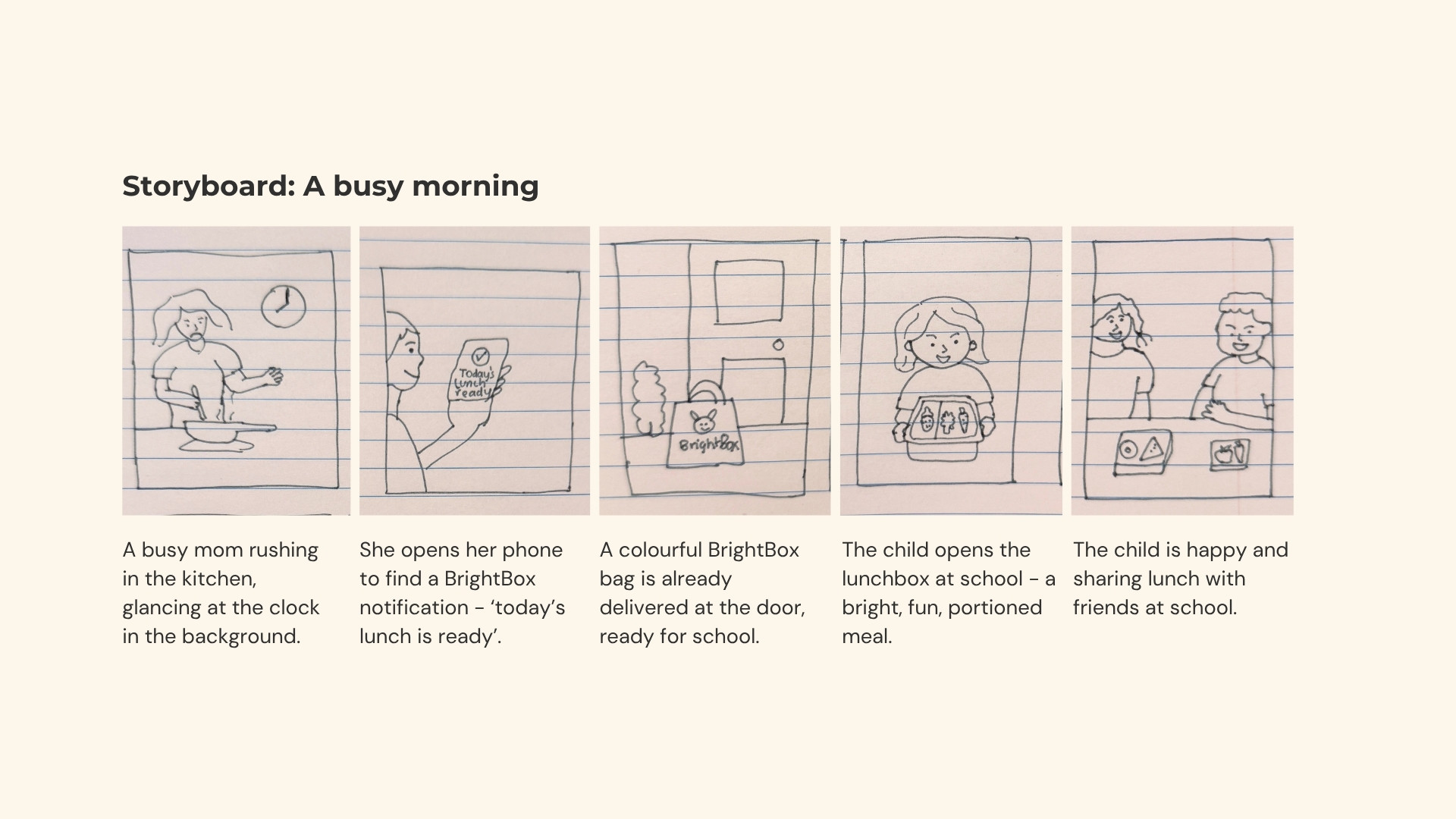
Ideation for a brand identity project looks different from product design — it's less about feature exploration and more about finding the visual and verbal territory that feels true to the brand. I started with a storyboard to pressure-test the brand's emotional arc.
Five scenes: a stressed mum in the kitchen, a delivery notification on her phone, the BrightBox bag at the door, the child opening a bright and portioned lunchbox at school, and the child sharing lunch happily with friends.
That storyboard became a recurring reference point throughout the project — if a design decision didn't serve at least one of those five moments, it didn't make the cut.
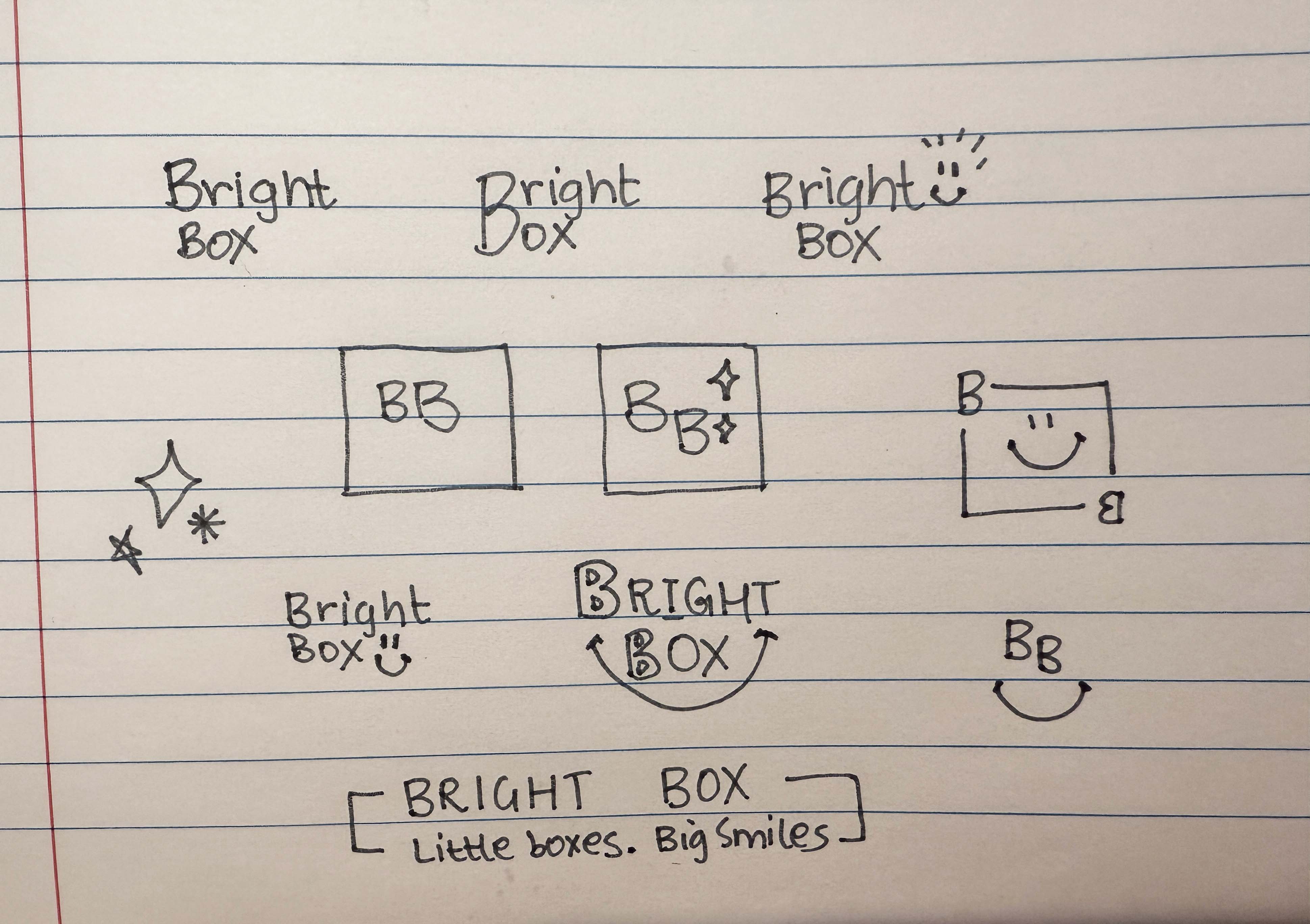
From there, two fictitious collaboration workshops shaped the creative direction. The first, a brand discovery session, locked in the four personality keywords that would govern every subsequent design decision: playful, bright, trustworthy, healthy. The second, a visual moodboarding session, resolved the colour direction (bright pastels over bold primaries), confirmed the illustration approach (cute line art of fruits, vegetables, and food items), and established the logo starting point: a wordmark-led identity with a simple smile device to carry the tagline — "Little Boxes. Big Smiles.
Initial logo sketches explored eight directions, ranging from lettermark approaches to full wordmarks with varying typographic treatments. The decision to lead with the full name rather than an abbreviation was deliberate — this was a new brand with zero recognition equity. Building familiarity from scratch meant the name needed to do the heavy lifting.
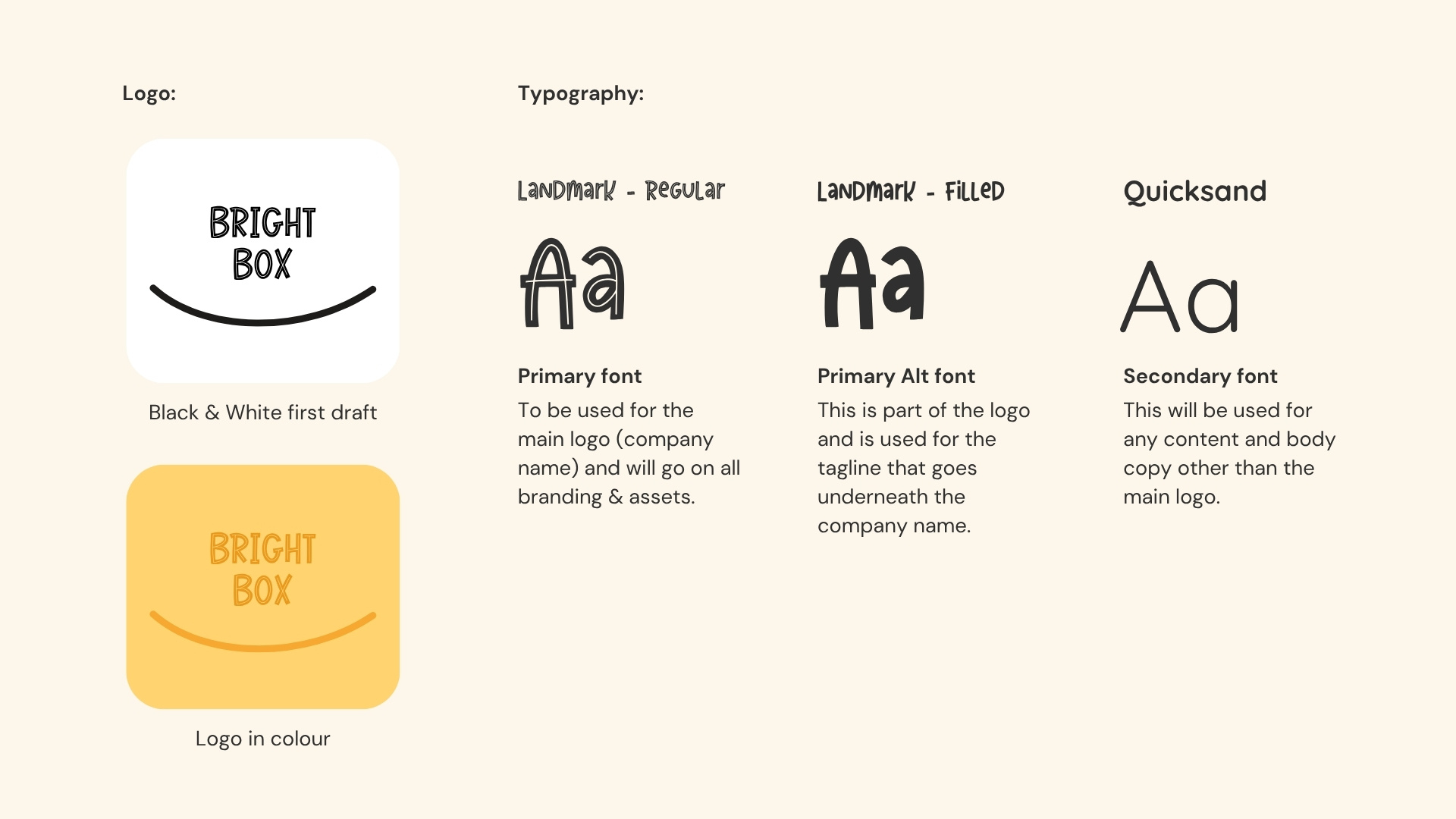
The first draft was presented with the logo, typography system, colour palette, and the set of illustrations.
As laid out in the initial sketches, the idea for the logowas to display the full name of the business to improve retention in the minds of consumers. Also included in the logo is a curved line that serves as a ‘smile’ to showcase a bit of brand personality.
The fonts chosen needed to be bold and easy to read but also cheerful and playful. I ended up using a custom font for the logo called ‘Landmark’. For the body copy and content that will ultimately be used on their website and other assets, I decided to use ‘Quicksand’ as this is a sans serif font, easy to read and on large body copies such as on a website.
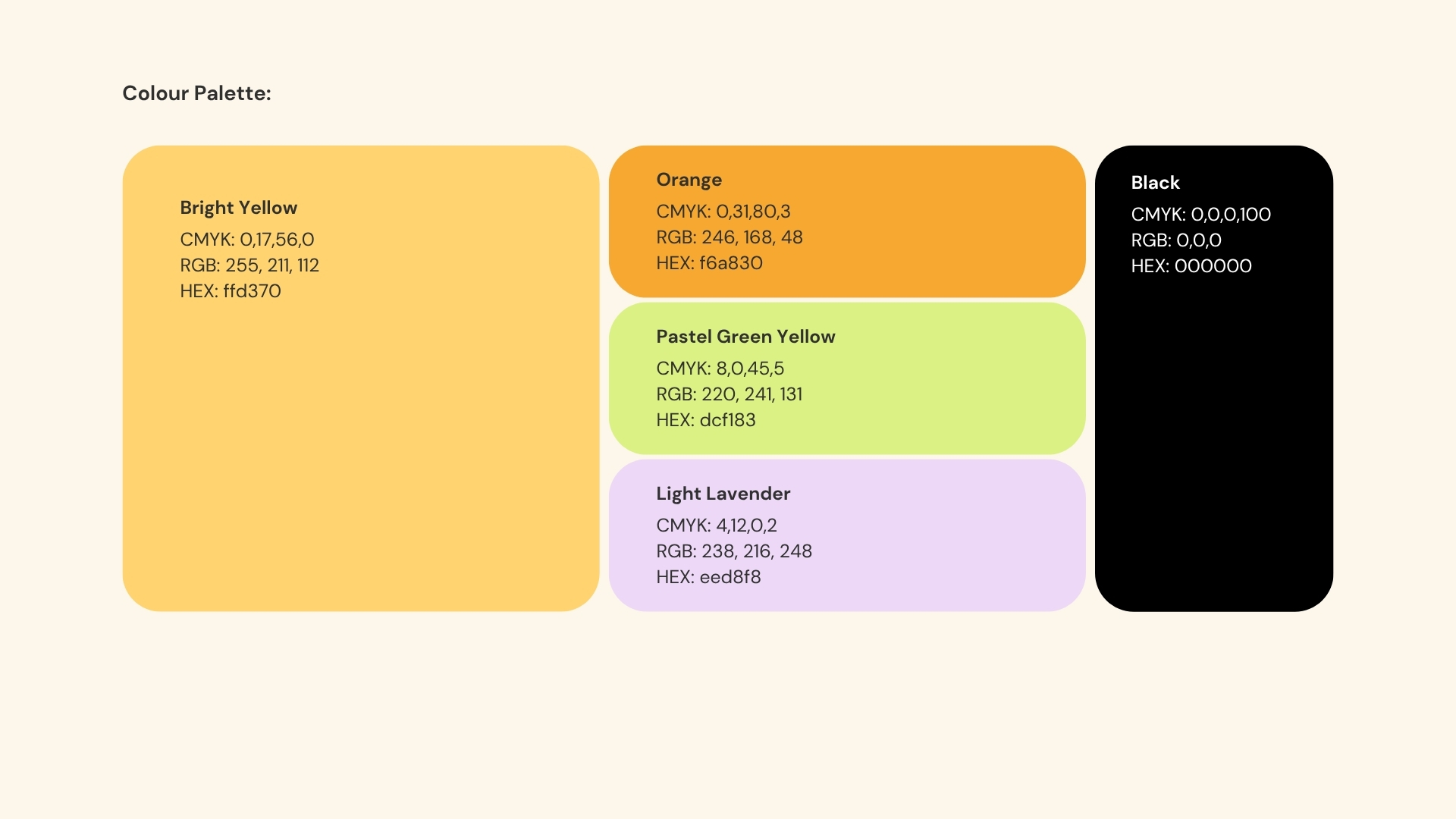
The overall colour palette for BrightBox’s brand identity reinforces the brand’s focus on key terms identified in the workshops: playful, bright, trustworthy and healthy.
The primary colour of yellow creates warm, bright vibes.
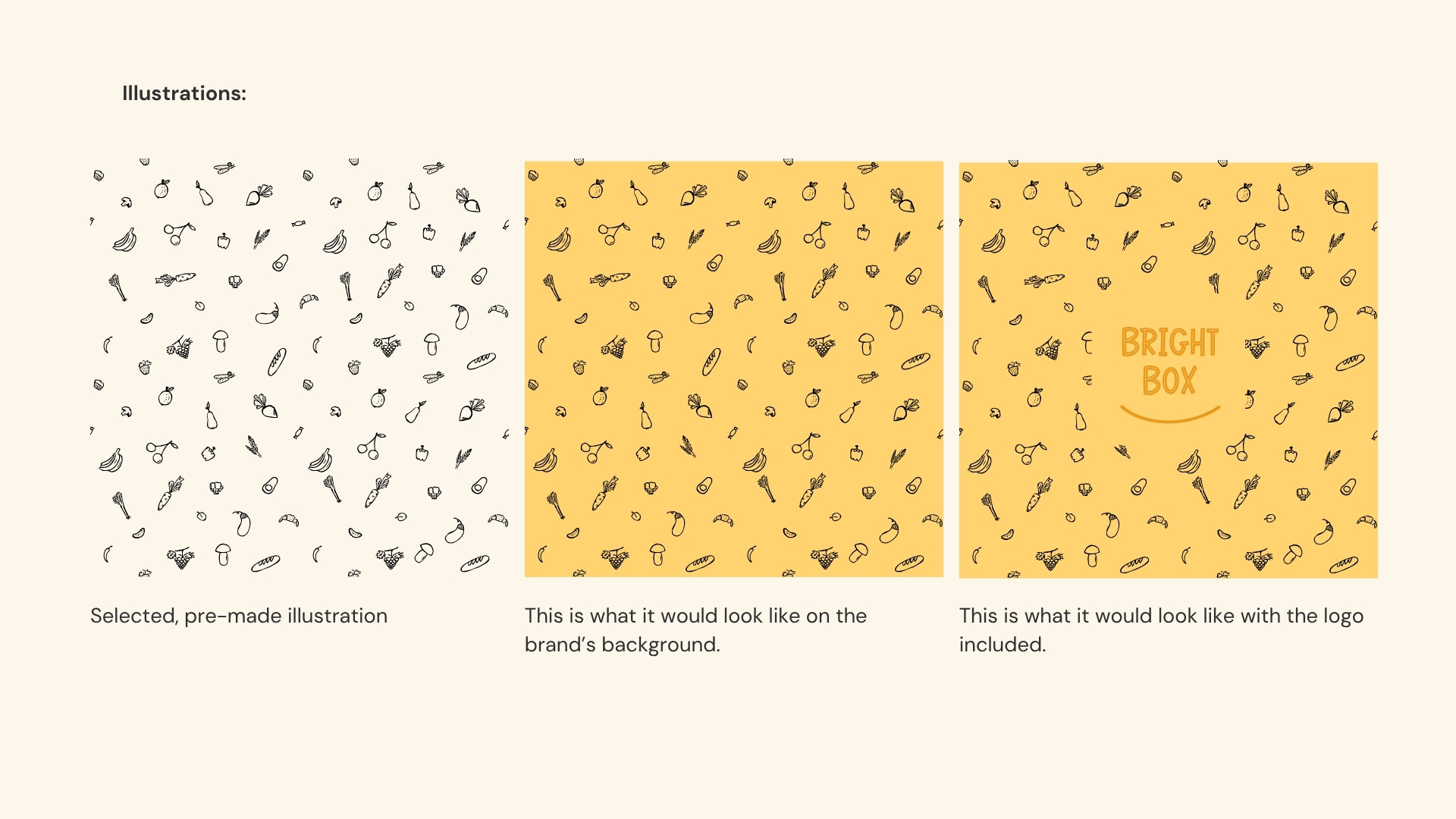
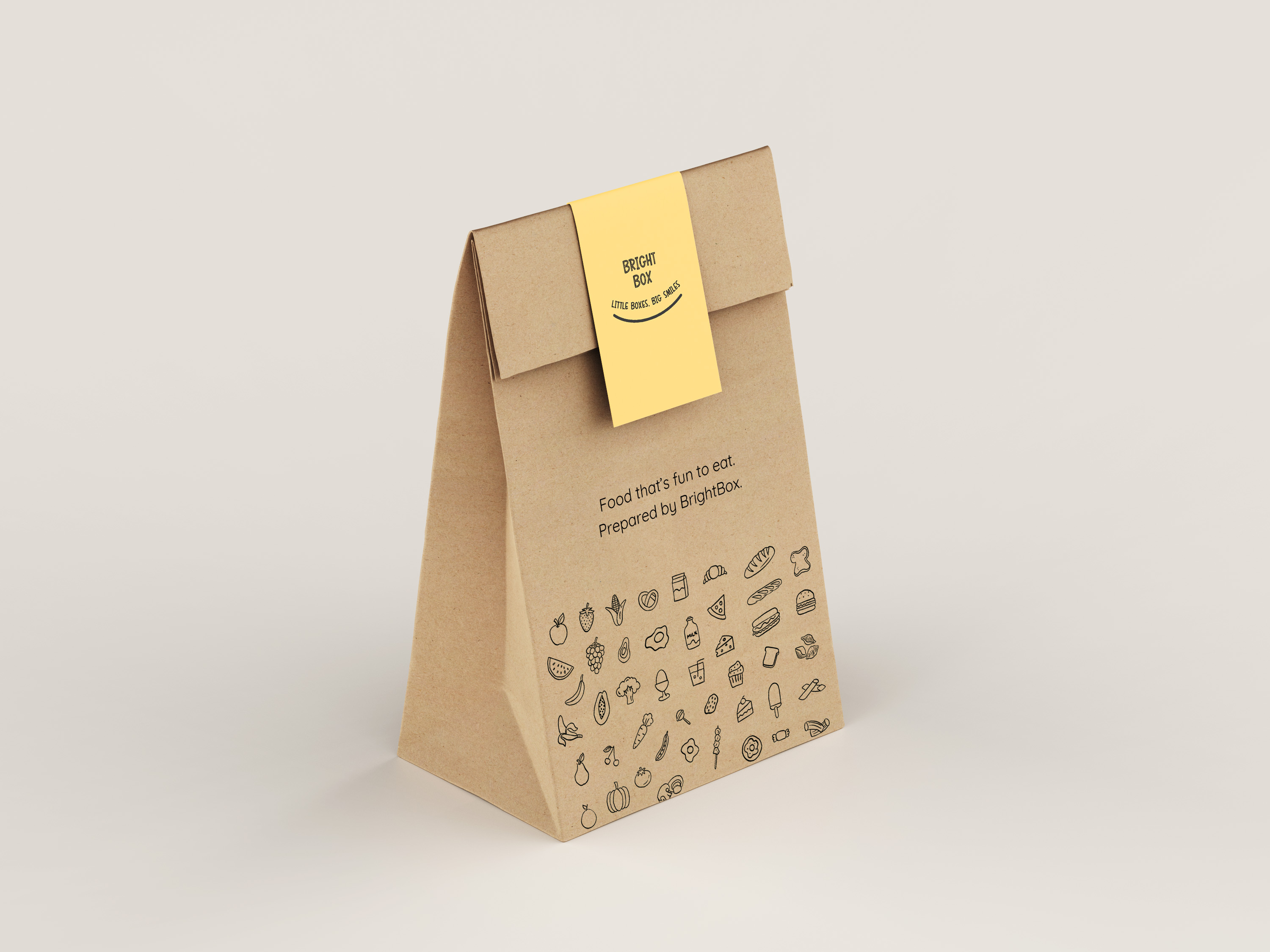
BrightBox would be using simple line illustrations of fruits, vegetables and other food items.
I chose a pre-made illustration pattern that depicted some of these items.
After presenting the branding identity to BrightBox, reception was positive albeit with a few changes requested. Following are snapshots of the feedback received along with the iterated and updated version of design elements based on it.
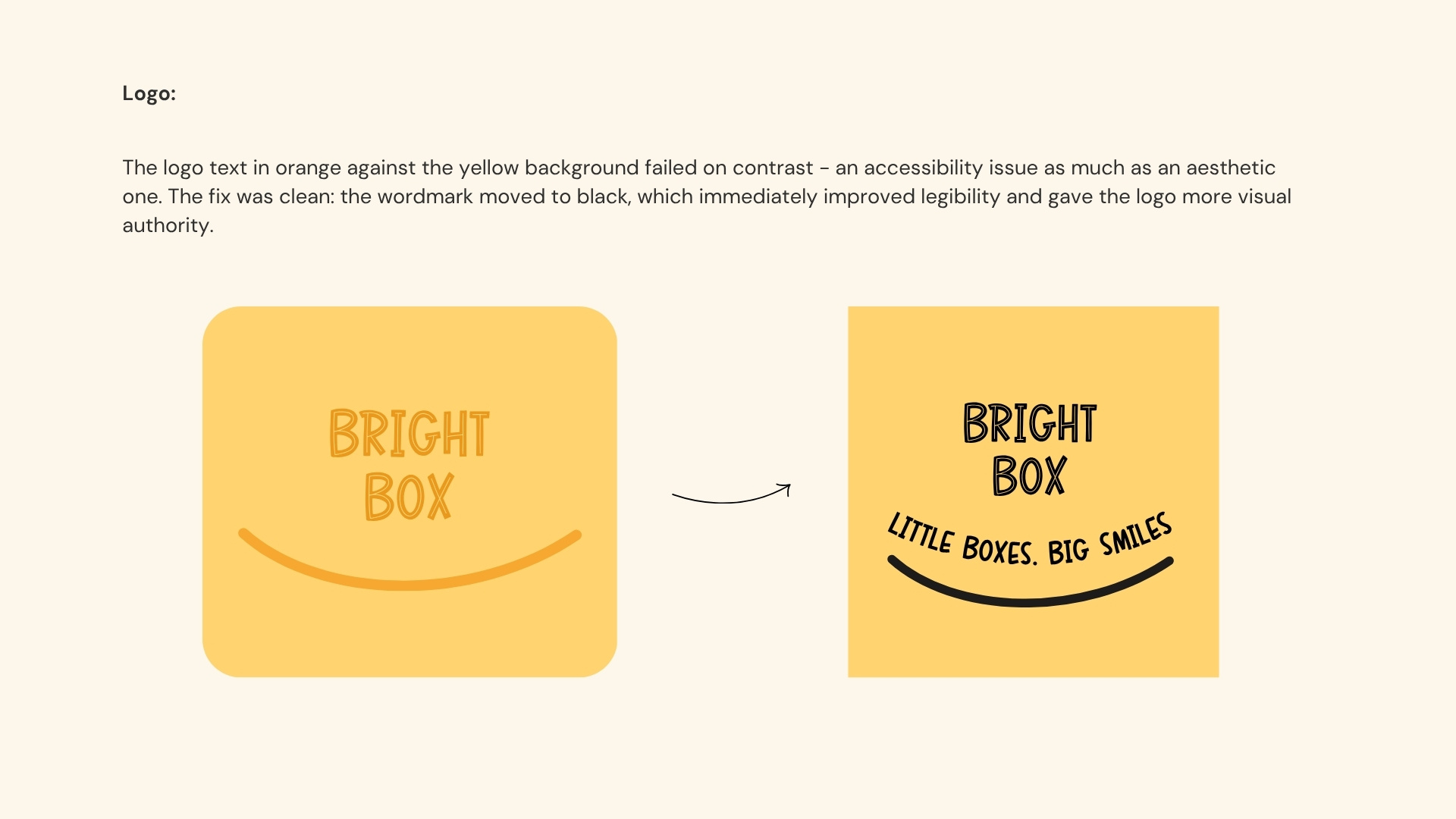
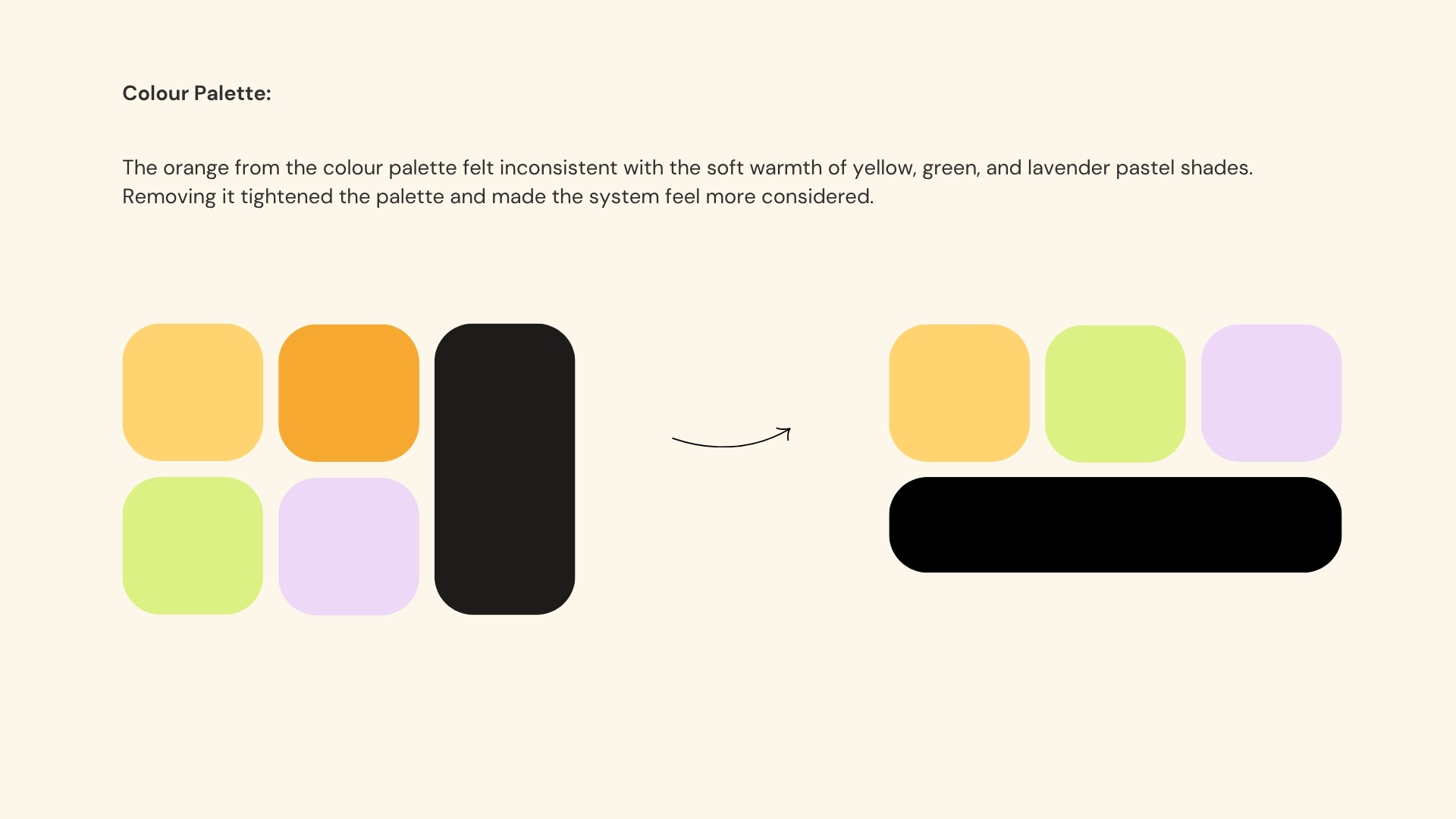
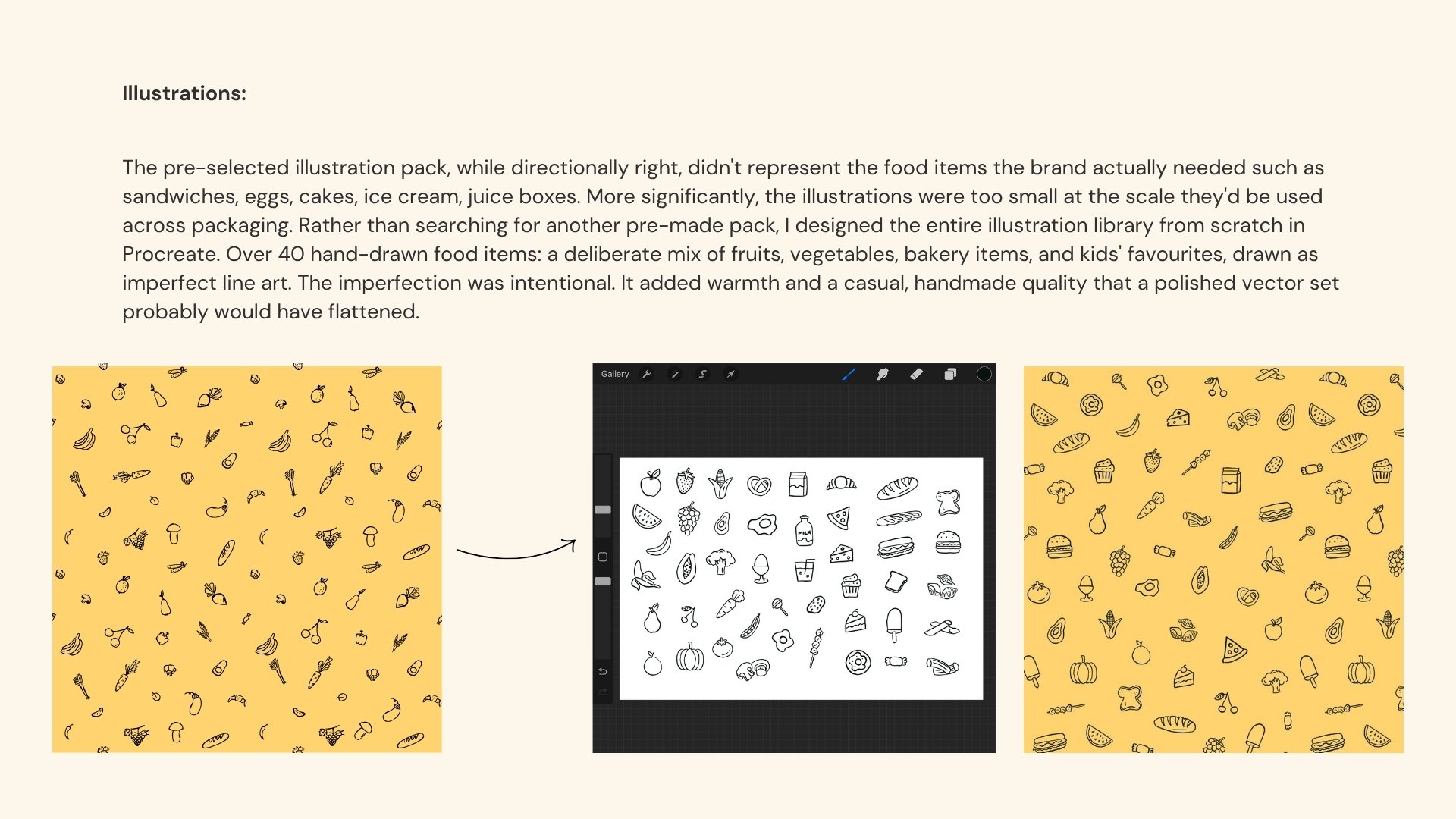
The final BrightBox brand system is built to scale — designed to work across packaging, digital platforms, and marketing from day one. A full brand identity presentation with do's and don'ts, final logo, typography, colour system along with the type of imagery, brand voice and tone were put together to present to the client.
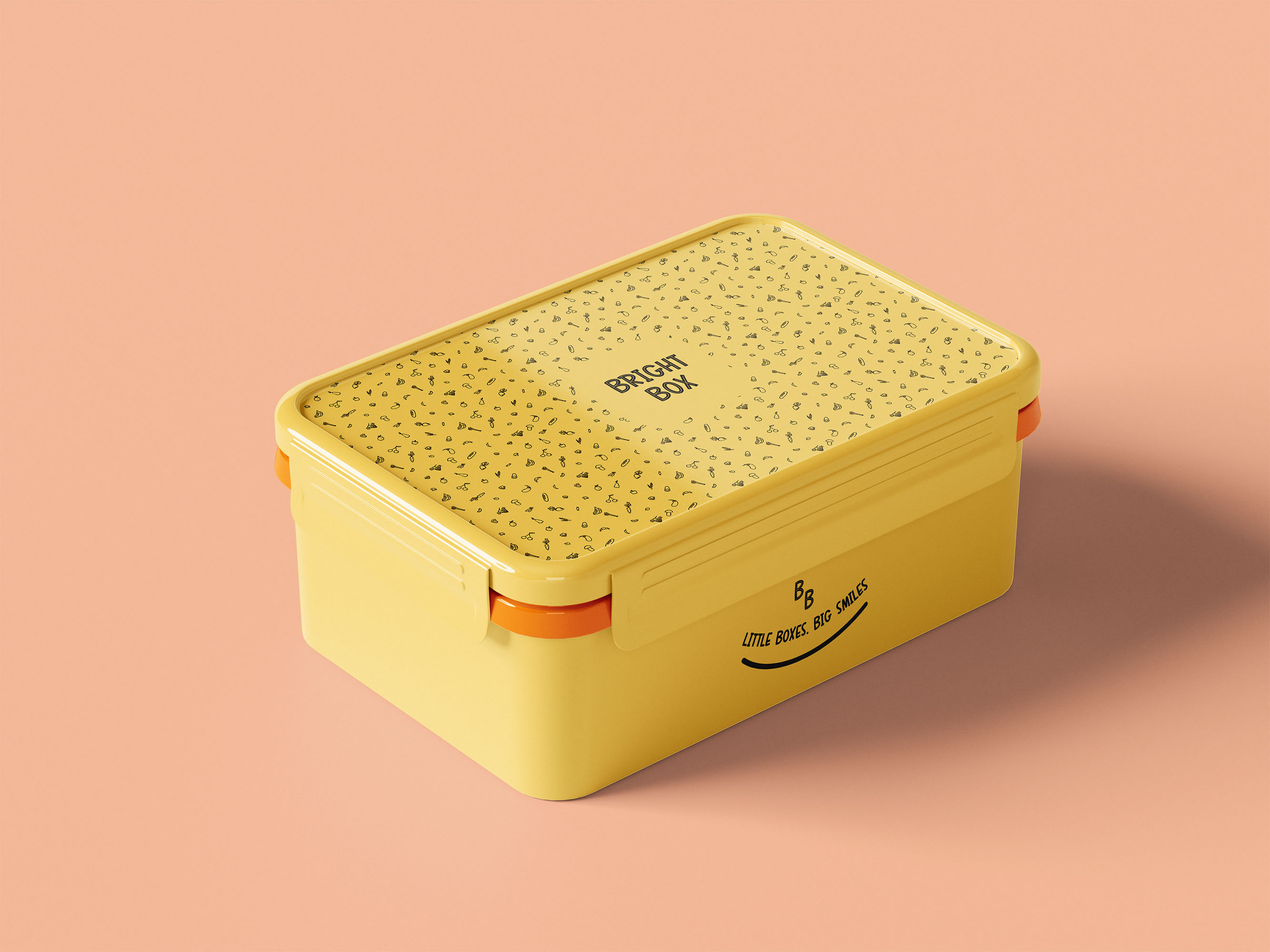
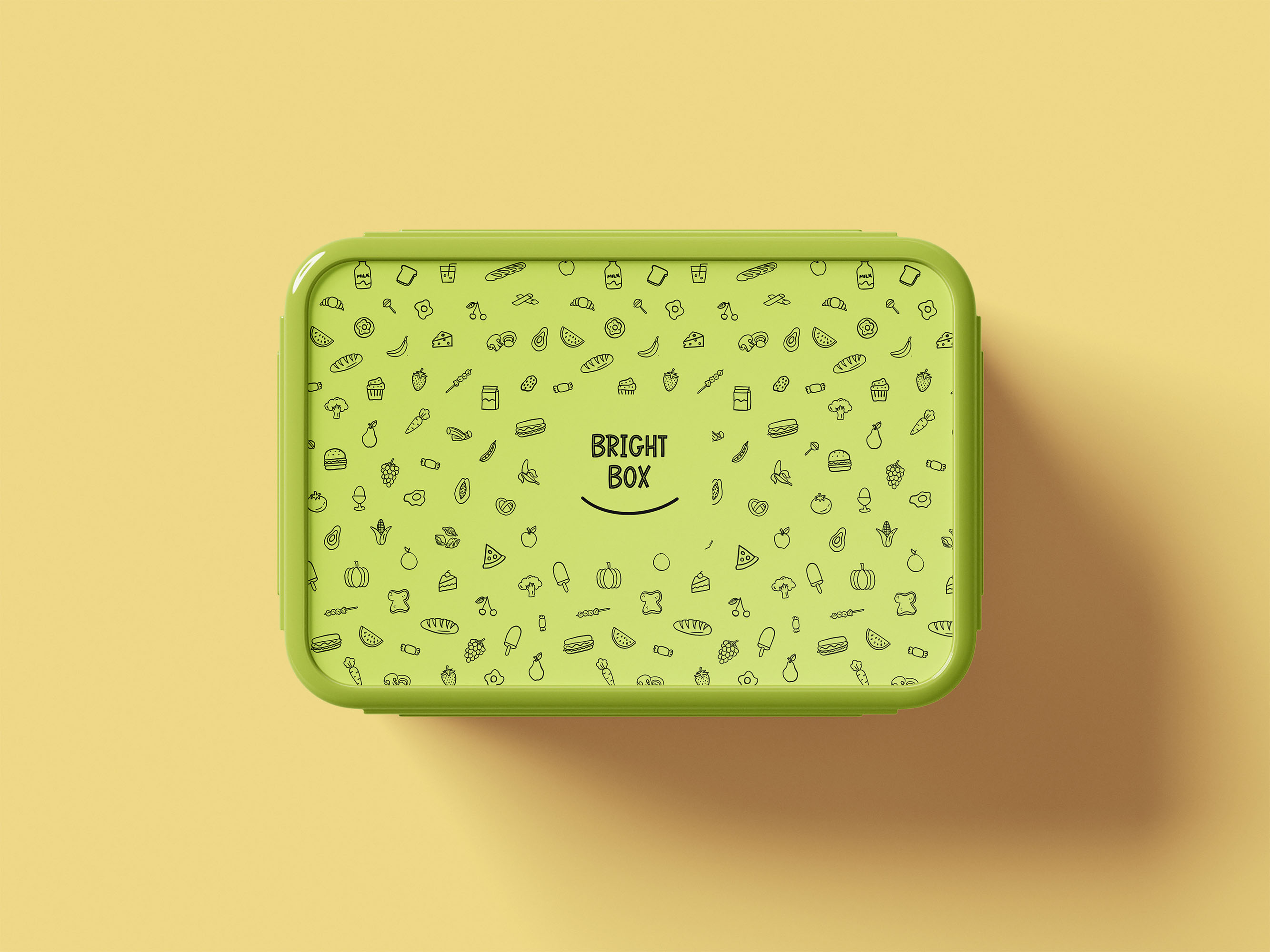
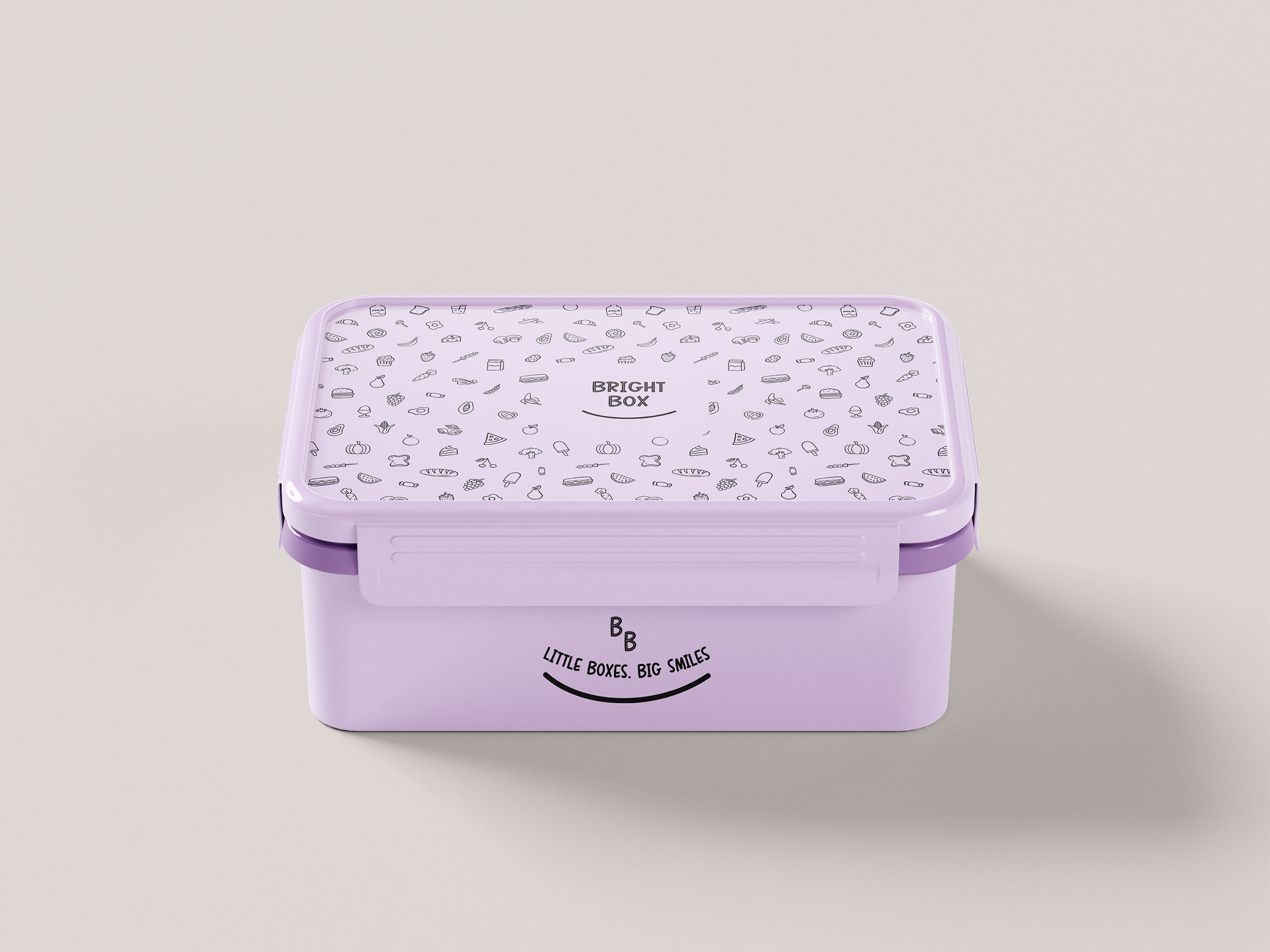
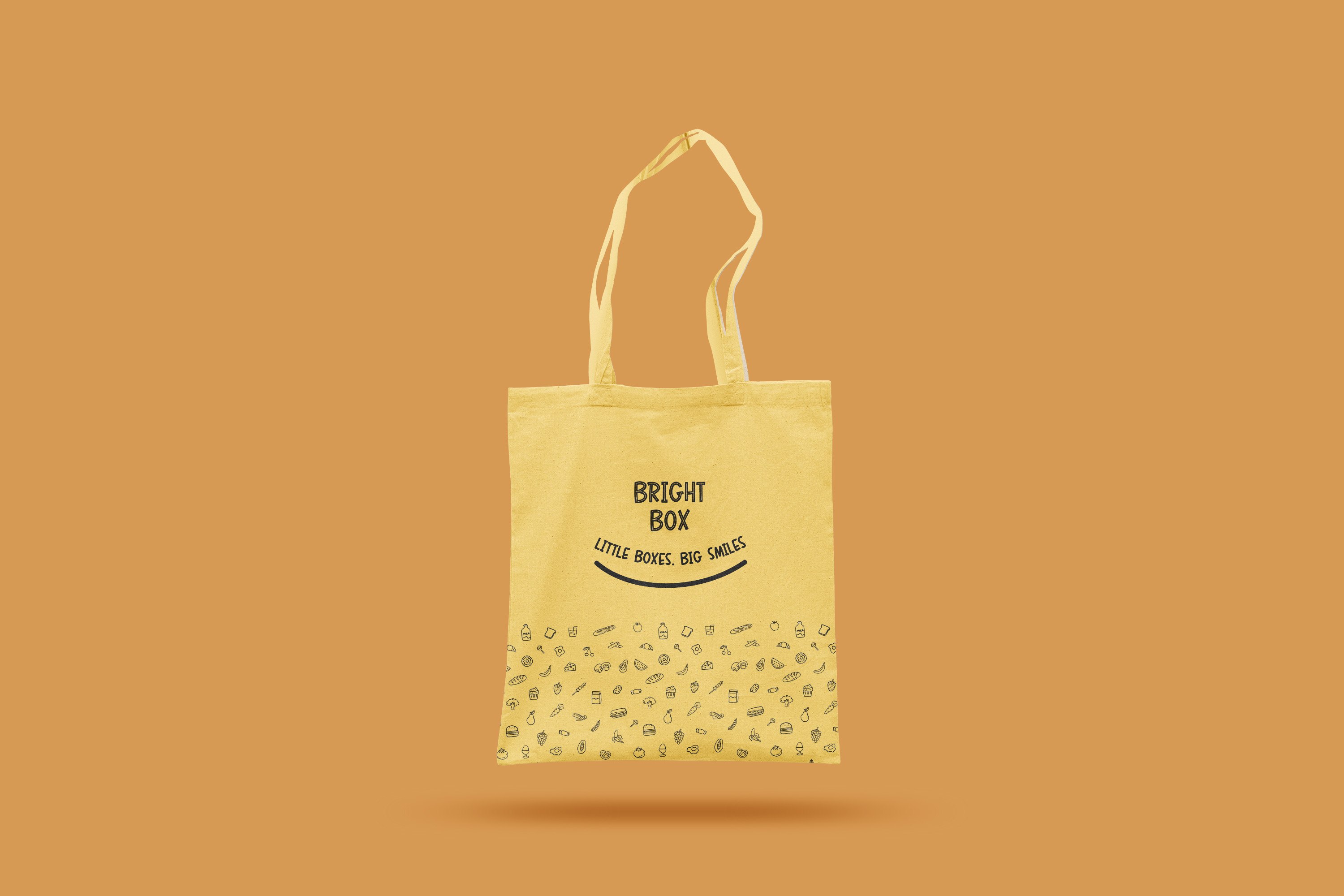
Brand applications bring everything to life across branded lunchboxes in all three colour variants, an eco-friendly delivery bag, a tote for merchandise and loyalty rewards, and a delivery notification mockup that hints at the digital product still to come.
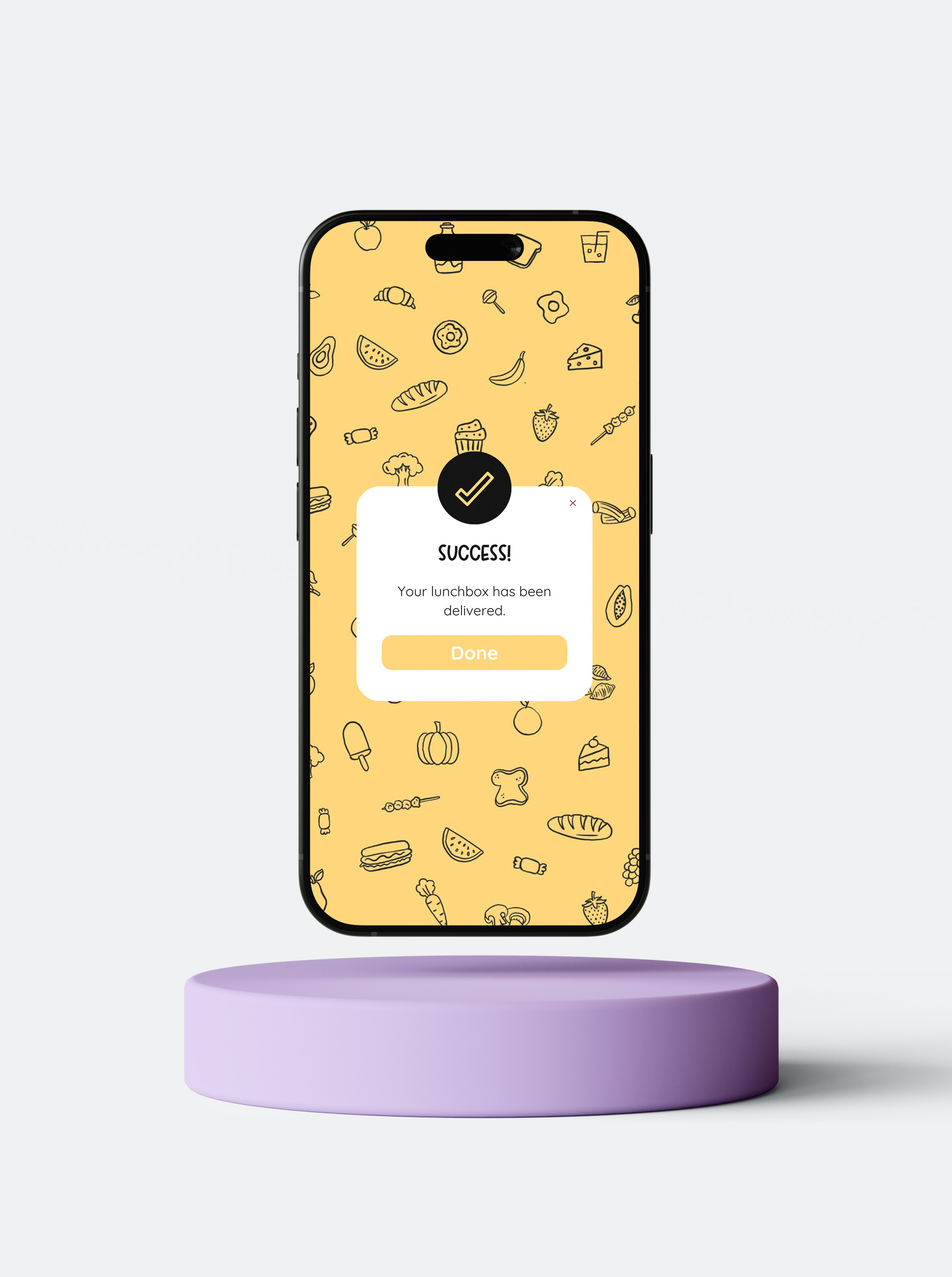
A mockup of what a successful delivery notification would look like on a parent’s phone. This could be part of the BrightBox app that will be developed in the future.
The decision to draw the illustrations from scratch rather than find a pre-made alternative was the right one, but it was also the most time-intensive part of the project. In a real agency context with a launch deadline, that trade-off would need to be managed more carefully — a conversation about timeline and budget before committing to a custom illustration library, not after the feedback came in.
The other honest reflection: the brand applications are physical-first. The digital surface — website, social media templates, the potential app — was defined at the guidelines level but not fully designed out. For a subscription business where the sign-up journey happens online, the digital brand experience is arguably more important than the delivery bag. That would be the clear next phase.
What this project confirmed is that brand strategy and visual design are inseparable. The four personality keywords — playful, bright, trustworthy, healthy — weren't just a mood board exercise. Every logo revision, every colour cut, every illustration style decision was measured against them. When you have a clear strategic brief, the creative decisions get easier. When you don't, they get expensive.